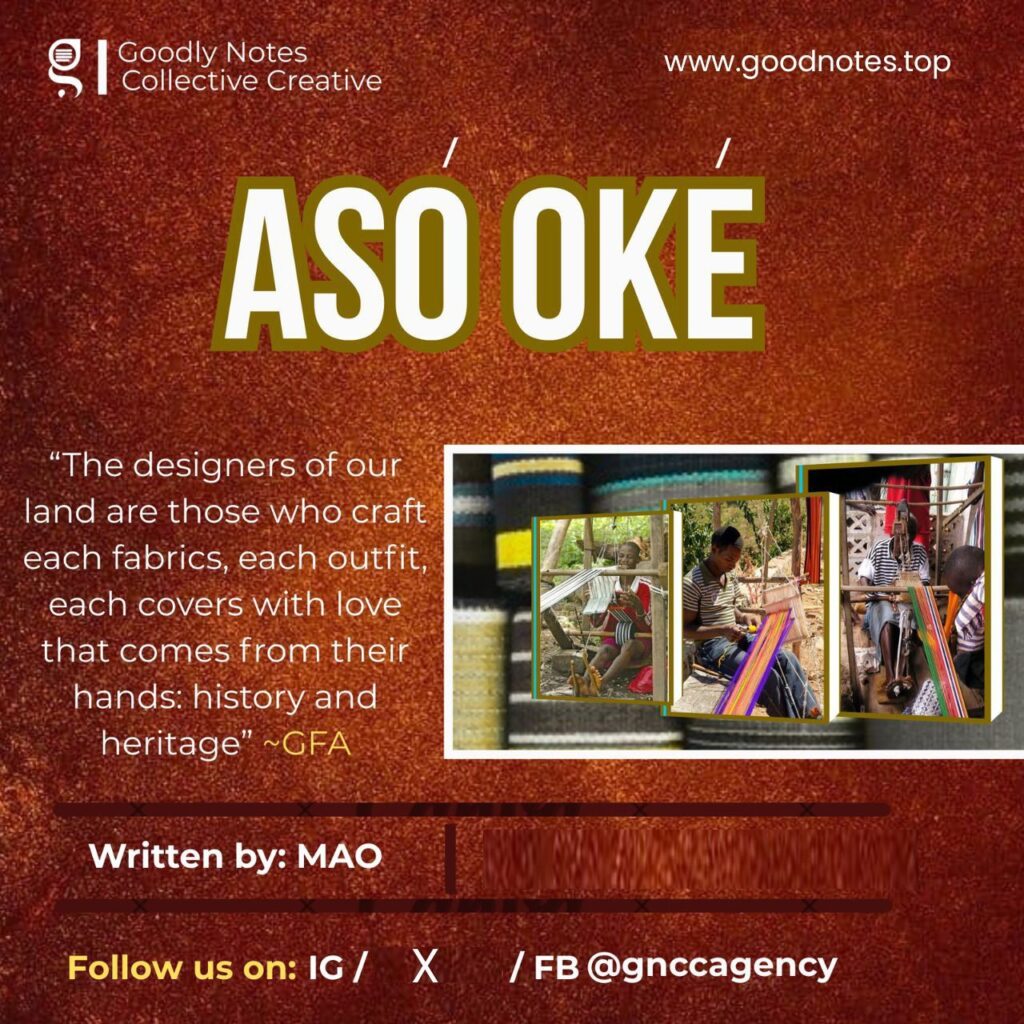
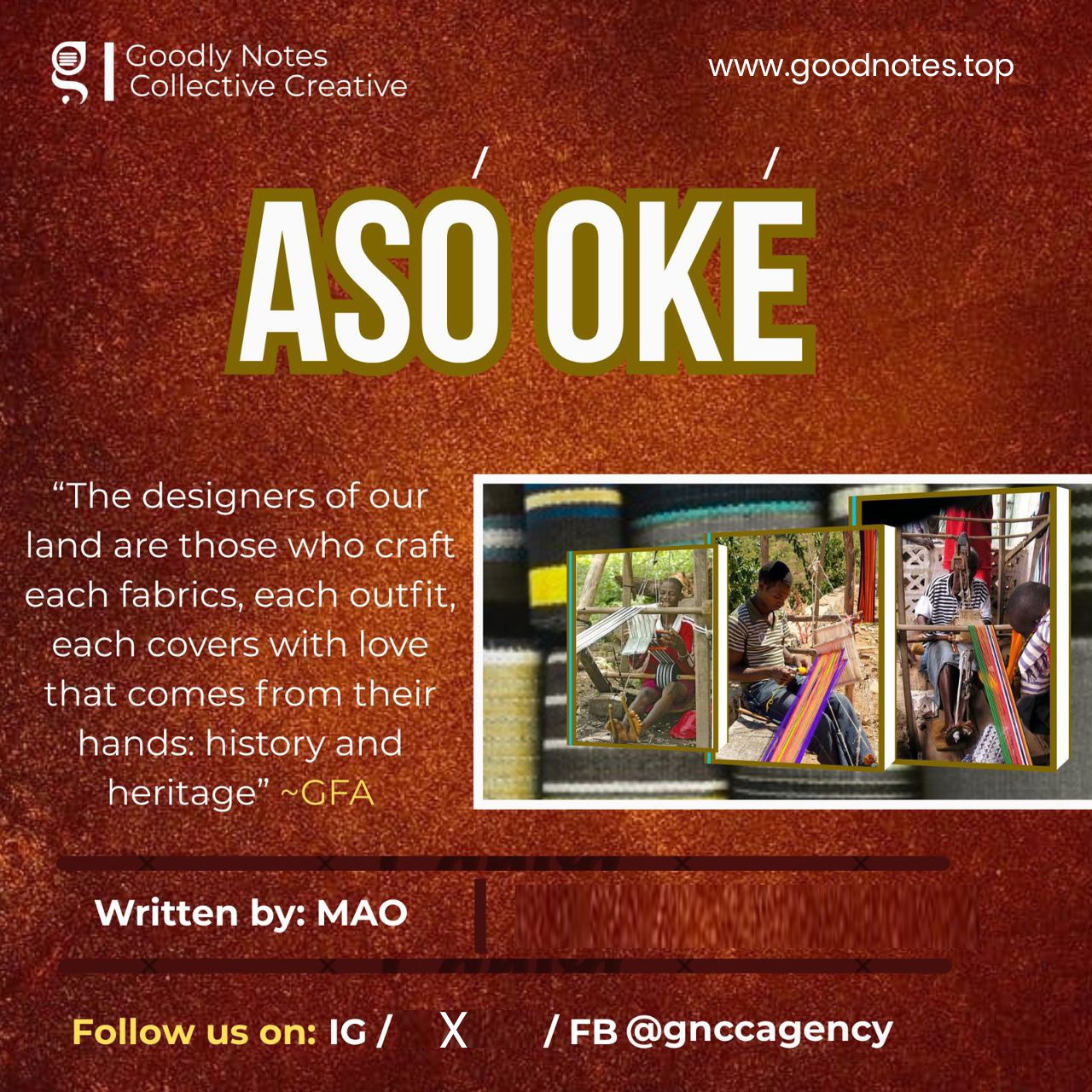
Aso Òkè
“Aso l’aso eni,
Aso ni a fi n’bo ni l’oju,
Aso Oke ni baba aso,
Aso Oke kii se ti gbogbo enia,
Oun l’aso ti a fi n’joba,
Aso ti a fi n’se ayeye,
Aso ti a fi n’pe ni omo Yoruba gidi.”
(Translation: Cloth is our covering,
Cloth gives us dignity,
Aso Oke is the father of all fabrics,
Not for everyone, but for the noble,
It crowns kings, it marks celebrations,
It proclaims the true Yoruba identity.)
Cloth is never just cloth in Nigeria. It carries weight, meaning, and memory. But when we speak of Aso Oke, we enter into the heart of Yoruba identity; a fabric that doesn’t just cover the body but tells a story of heritage, pride, and presence.
The Cloth of Our Forefathers
Aso Oke, literally “top cloth” in Yoruba, has been a mark of honor for centuries. Woven by hands on traditional wooden looms, it was once reserved for royalty, chiefs, and the most important ceremonies. Every thread was intentional. Every pattern carried identity. Wearing Aso Oke was about dignity, royalty and humility.
The fabric came in three main forms:
- Etù – deep indigo, calm, regal, often chosen by men of wisdom and stature.
- Sányán – soft beige silk, graceful, aristocratic, said to be the fabric of kings.
- Alàárì – bold red, a celebratory fabric worn in moments of joy and triumph.
Imagine your grandmother, decades ago, wrapping herself in Etù for a festival, her gele tied high, her movements graceful under the moonlight. Imagine your grandfather’s agbada, woven from Sányán, billowing as he danced to the beat of the talking drum. These were not random fashion choices. They were deliberate, symbolic, and deeply cultural.
In Yoruba land, no major ceremony is complete without Aso Oke. Weddings, naming ceremonies, coronations, and even burials, the fabric is present to mark significance. It is the fabric for the people. A fabric for all occasions. Ever pictured something you can wear anywhere, to any ceremony. Aso Oke without much introduction makes it clear that you are an omo Yoruba (a Yoruba child). Styling and designing it to blend into whatever that occasion is about.
At weddings, families choose aso ebi (family cloth), often in Aso Oke, to symbolize unity and support. Guests enter the hall shimmering in coordinated colors, a living sea of heritage. The bride appears in her iro (wrapper), buba (blouse), and a towering gele, each piece intricately woven from Aso Oke. The groom, regal in his agbada, completes the picture of Yoruba royalty. The Aso Oke stands out, making you shimmer and shine throughout the occasion.
It is more than dressing up; it is an announcement. A declaration that this day is not ordinary. Aso Oke elevates the moment. It is not just traditional, it is elegance, sophistication and lures adoration.
At a king’s coronation, layers of Aso Oke wrap around his body, each one symbolizing authority and the weight of leadership. When the new child is named, Aso Oke may wrap the baby, welcoming them into a lineage that stretches back centuries. Even in mourning, families may choose darker Aso Oke, showing respect while holding on to dignity.
The Craftsmanship Behind the Fabric
What makes Aso Oke truly special is not only how it looks, but also how it is made. The weaving process is slow, deliberate, and deeply skilled. Weavers sit at narrow looms, passing threads back and forth with precision. Patterns emerge; stripes, motifs, sometimes infused with metallic threads, each design carrying meaning.
This is slow fashion at its best. In a world obsessed with speed, Aso Oke insists on patience. One piece can take days, even weeks to complete. The result is a fabric that feels alive, textured, weighty, intentional, adorned, showered with care which is unreplicable by machines.
Evolution of Aso Oke
Tradition does not mean stagnation. Over time, Aso Oke has evolved. Where once it was woven in muted indigo, beige, and red, today it sparkles with sequins, shines with metallic threads, and bursts with vibrant colors. Modern designers cut Aso Oke into jackets, gowns, shoes, tops and even handbags.
Yet, through all this creativity, the essence remains. The loom still holds the same rhythm. The cultural pride is unchanged. Whether worn in a village square or on a Paris runway, Aso Oke still whispers Yoruba heritage with every fold.
This is why we say, it is a fabric for any occasion. Tailor it your way, and you are good to go.
Aso Oke Across Borders
Step into a Yoruba wedding abroad, London, Houston, Los Angeles, Togo, Washington Toronto, and you will see Aso Oke holding its ground. Diaspora families invest heavily to source it from Nigeria, ensuring that even in foreign lands, their identity is woven into their celebrations.
International designers, too, are taking notice. Aso Oke has strutted down fashion runways, merged into haute couture collections, and appeared in films and music videos. In order to make their line stand out, adding versatility and a great story to each brand. Yet for the Yoruba, its meaning goes beyond aesthetics. It is not just beautiful fabric. It is a reminder of home.
Why Aso Oke Still Matters Today
Every generation faces the temptation to trade old things for new. But Aso Oke refuses to be forgotten. It still remains. Why? Because it represents continuity.
- It teaches patience: every strand is a lesson in craftsmanship.
- It carries identity: wearing it connects you to your people. Or, to the Yoruba people. To the Nigerian-African history.
- It commands respect: no matter the occasion, Aso Oke elevates the atmosphere. Catching eyes, nnblever inferior. Always superior.
Even in today’s fast fashion era, where trends come and go with dizzying speed, Aso Oke endures. It is timeless. It is memory you can touch. It is heritage you can wrap around your shoulders.
Aso Oke is not just fabric. It is poetry woven into threads. It is dignity made visible. It is memory, unity, and celebration all at once.
So, the next time the talking drums call and the people gather, the next time you attend an Owambe, when a bride shines in her gele and a groom walks tall in his agbada, remember this: the fabric they wear is not just cloth. It is legacy. It is pride. It is Yoruba culture wrapped in elegance.
Aso Oke is not just clothing. Aso Oke is Nigeria. Aso Oke is Yoruba. Aso Oke is us.
Did You Know?
Royal Roots: In the old days, certain types of Aso Oke, like Sányán, were so luxurious they were reserved almost exclusively for Yoruba kings and chiefs.
Bride Price Fabric: In some Yoruba towns, a length of Aso Oke was part of the traditional bride price, symbolizing that the groom’s family could clothe their new wife in dignity.
Names with Meaning: The names of the fabrics aren’t random, Etù (indigo blue) comes from the Yoruba word for guinea fowl, whose feathers resemble its striped patterns.
Diaspora Demand: Yoruba families abroad still source Aso Oke from Nigeria for weddings, sometimes shipping it across continents just to keep the tradition alive.
Fashion Evolution: Today, Aso Oke goes beyond agbada, buba and gele, designers are turning it into sneakers, bags, belts, and even wedding gowns, taking Yoruba heritage global.
Hence! NAIJA GOOD!W
Written by ~MAO.
Co-written by- Goodness Felix-Adebayo.